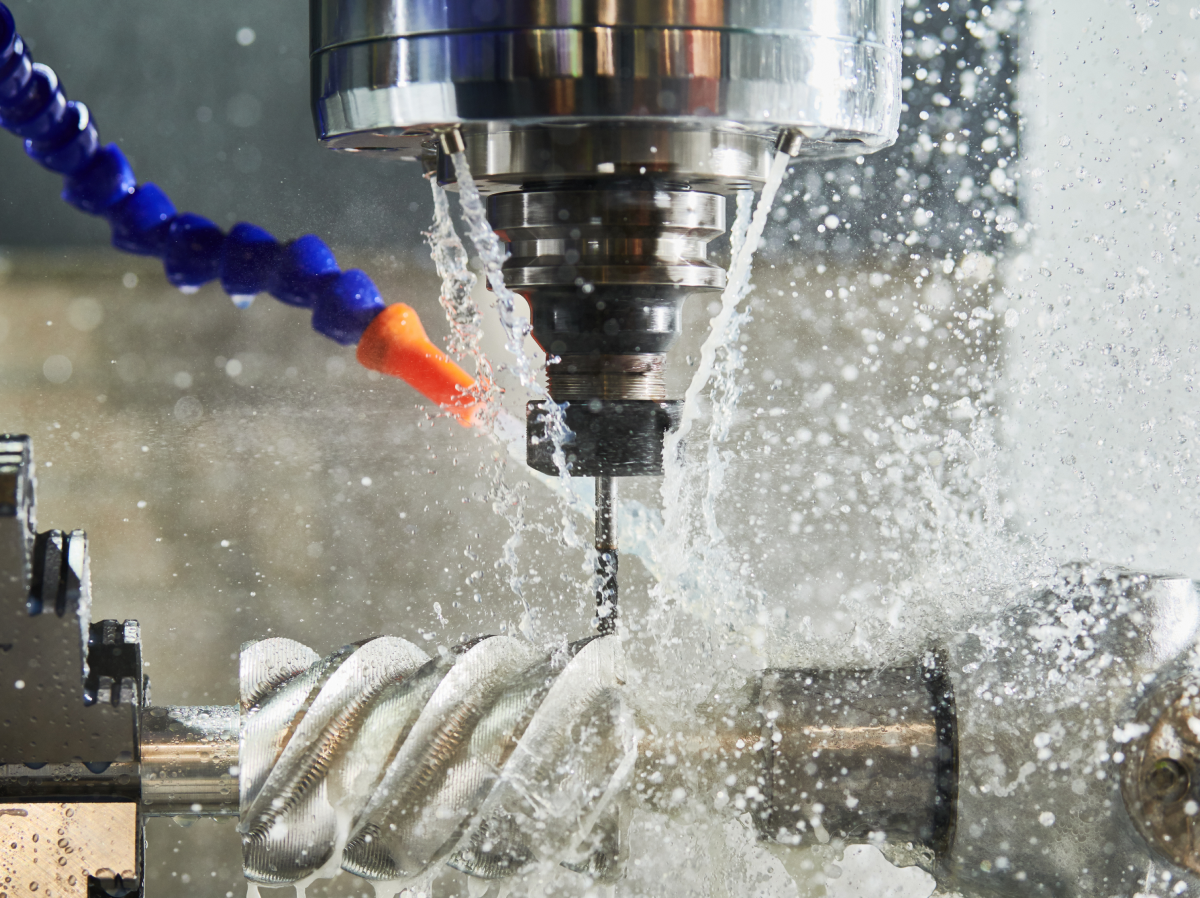



Choosing the correct end mill is crucial for part quality, tool longevity, and work efficiency. Unlike drills, end mills can cut in all directions, making them versatile for shaping profiles, creating pockets, and smoothing surfaces.
Understanding Your End Mill: The Basics
Key components of an end mill include:

- Cutter Diameter: The main width of the cutting part.
- Shank Diameter: The width of the part that holds the tool.
- Overall Length: The total length from end to end.
- Length of Cut (Flute Length): The depth the cutting edges can reach.
- Length Below Shank (Reach): The length from the neck to the cutting tip.
- Helix Angle: The angle of the spiral on the cutting edges.
- Flutes: The spiraled cutting grooves.
Fewer flutes allow for more chip evacuation and deeper cuts, suitable for softer materials, but result in a weaker tool. More flutes create a stronger tool but offer less chip space, resulting in smoother cuts, which is ideal for harder materials. Advanced end mills may use a Variable Helix or Variable Pitch (unequal flute spacing) to reduce vibrations, extend tool life, and improve surface finish.
Common Types of End Mills

- Square End Mills: 90-degree tip for general milling.
- Weldon End Mills: Feature a flat spot on the shank to prevent slipping during heavy cuts.
- Ball End Mills (Ball Nose): Round cutting tip for milling curved or contoured surfaces and 3D shapes.
- Radius End Mills: Feature a rounded corner at the tip, reducing chipping and providing a stronger edge, making them particularly useful in steels.
- Finisher End Mills: Designed for super smooth, polished finishes in a single pass; not typically for plunging.
- Drill End Mills: Can spot, drill, mill, and countersink; generally not recommended for drilling steel.
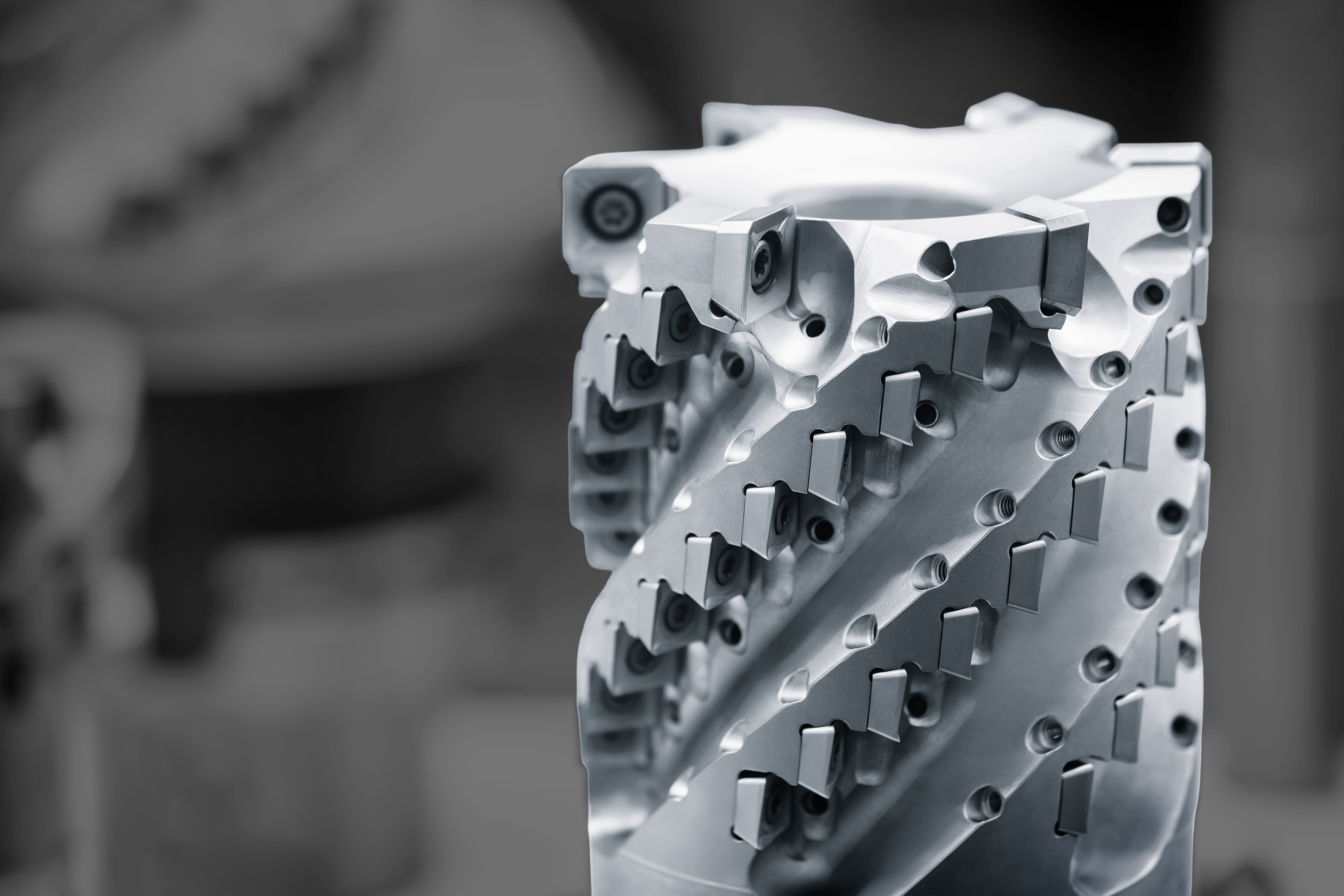
- Roughing End Mills (Hog Mills): Designed for rapid material removal with wavy or serrated edges to break chips. Available with coarse or fine teeth.
- Rounding End Mills: Specialized for creating perfectly round edges, with strengthened tips.
- Undercutting End Mills (Lollipop Cutters): Cutting edge extends beyond shank diameter to cut features wider than the shank.
Your End Mill Selection Checklist
Key factors for choosing an end mill: workpiece material, operation, tool geometry, and machine limits.
Workpiece Material:
- Aluminum, Brass, Plastics: Carbide or HSS tools with 2-3 flutes (more for High-Efficiency Milling – HEM). High helix angles, polished flutes, and coatings like ZrN, TiB2, or DLC are beneficial. Avoid aluminum-containing coatings.
- Mild or Alloy Steels: Solid carbide or cobalt tools with 3-4 flutes. Standard or variable helix. Coatings like TiAlN, AlTiN, or TiCN are good for heat and wear management.
- Stainless Steels, Tool Steels, Superalloys: High-performance carbide end mills with 4-6+ flutes (6-13 for HEM). Heat-resistant coatings like AlTiN, TiAlN, or AlCrN are crucial.
- Abrasive Materials (graphite, composites): Diamond-coated tools or PCD inserts are best due to extreme hardness.
- Slotting or Traditional Roughing: Use tools with fewer flutes (3-4 in metals) and larger flute valleys for chip clearance. Roughing end mills may have chipbreakers.
- High-Efficiency Milling (HEM) / Dynamic Milling: Uses lower radial depth of cut and higher axial depth of cut. End mills with more flutes (6-13) are common.
- Finishing: For precise dimensions and smooth surfaces, use end mills with high flute counts (5-10+), light side-step, and potentially variable helix.
- Plunging or Pocketing: Requires a center-cutting geometry. Choose a profile (square, ball, radius) based on the part shape.
- Profile: Square for sharp corners; Corner Radius for stronger edges and better tool life in steels; Ball for 3D surfaces and fillets.
- Diameter: Large enough for rigidity and material removal, but small enough for the smallest features/corners.
- Length: Keep stick-out and flute length minimal. Use necked or relieved shanks for more reach if needed.
- Fewer Flutes (2-3): Best for softer materials (aluminum, brass, plastics) for chip space.
- Medium Flutes (3-4): General-purpose for steels and aluminum, balancing strength and chip space.
- Many Flutes (5+): Ideal for finishing or HEM in harder materials (steels, titanium) for smooth finishes and stability.
- Cast Iron: Typically 4-6 flutes.
- Titanium and Superalloys: Often 6-13 flutes for HEM.
- Steels (mild, alloy, tool, stainless): AlTiN/TiAlN for high heat, dry, or MQL. AlCrN or AlTiCrN for very high heat or high-temperature alloys. TiCN for impact resistance. Avoid non-ferrous coatings on steel.
- Aluminum and Non-Ferrous: ZrN or TiB2 for low friction and resistance to sticking. DLC for low friction and wear resistance. Uncoated, polished carbide with flood coolant can also be effective. Avoid aluminum-containing coatings on aluminum.
- Machine Limits: Ensure the machine (spindle, tool holders) can handle the required speeds and feeds. Consider the tool diameter relative to the machine taper and avoid excessive stick-out to prevent chatter.
- Roughing: Maximize material removal speed; surface quality is secondary.
- Finishing: Achieve exact dimensions, tight tolerances, and smooth surface finish with light cuts.
- Teeth/Flutes: Roughers have fewer, larger flutes, often with serrated/wavy edges (chipbreakers). Finishers have more, smaller, sharper teeth with smooth, often polished flutes.
- Core and Strength: Roughers have thicker cores and beefier edges for heavy loads. Finishers have thinner cores and precisely prepped edges.
- Flute Surface: Roughers have coarser flutes; Finishers have smooth flutes for chip flow.
- Roughing: Higher feed rate per tooth, larger depth of cut, often higher radial engagement. Leaves visible tool marks.
- Finishing: Lower feed rate per tooth, shallow depth of cut, light radial engagement for tight tolerances and smooth surfaces.
Operation:
Basic Geometry:
Flute Count and Chip Evacuation:
Coating and Machine/Toolholder Limits:
Roughing End Mills Versus Finishing End Mills
Purpose and Use:
Geometry Differences:
Cutting Parameters:
Practical Shop Rules:
Never use a roughing end mill for finishing due to its serrated pattern. Do not remove significant material with a finishing end mill. The typical strategy involves a dedicated roughing tool, possibly a semi-finisher, and then a dedicated finishing tool.
Browse our full inventory of RedLine end mills here and here to find the perfect tool for your next project.