


Explore the diverse world of Computer Numerical Control (CNC) machines, and understand their classifications by process, cutting method, and axes.
What are CNC Machines?
CNC machines enable automated, highly precise, and repeatable manufacturing processes. Their ability to follow numerical instructions allows for intricate designs and mass production with minimal human intervention.
What Do CNC Machines Do?
These machines perform cutting, drilling, milling, turning, engraving, and forming operations across metals, plastics, wood, composites, and other materials.
How Do CNC Machines Work?
CNC machines execute coded instructions using “G” and “M” codes that command motors to guide cutting tools or workpieces through precise tools paths.
The process follows three steps:
- Create your design in CAD software,
- Generate toolpaths and G-code using CAM software
- Then the machine’s onboard controller interprets these instructions and coordinates axis movements with micron-level precision.
Types of CNC Machines
CNC machines are typically classified based on their primary machining process, the cutting method employed, or the number of axes they utilize for movement and manipulation. This guide breaks down these distinctions.
Machines Classified by Machining Process
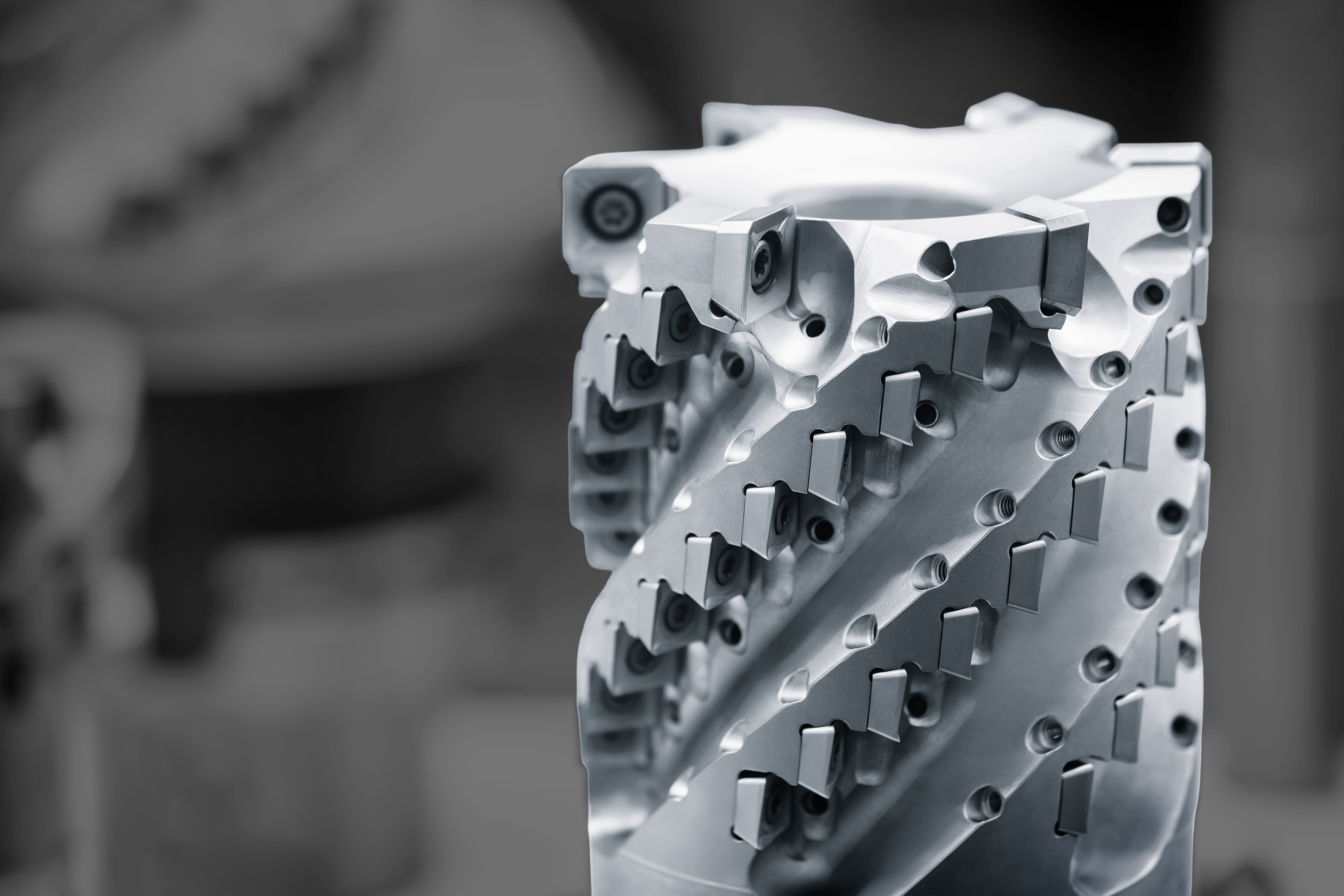
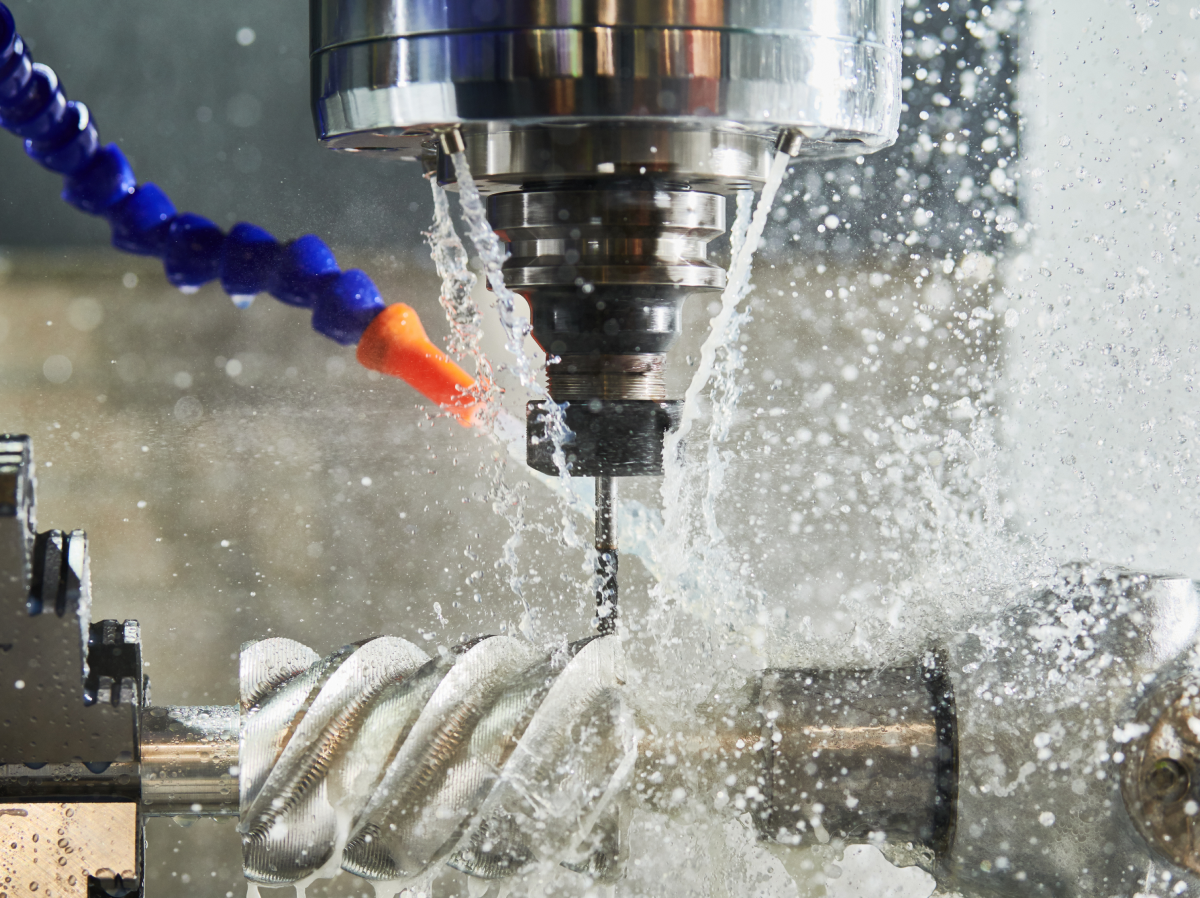
CNC Milling Machines

Utilize a rotating cutting tool to remove material from a stationary workpiece, creating complex shapes. They typically have 3 linear axis and sometimes have 1-2 rotary axis (aka: 4 or 5 axis machines).
Ideal for:
- Prismatic parts
- Pockets and slots
- Drilling
- Intricate 3D surfaces (e.g., brackets, housings)
CNC Lathes (Turning Centers)

The workpiece spins at high speed while a stationary cutting tool carves away material. These machines excel at producing rotationally symmetric parts.
Ideal for:
- Shafts, bushings, pins
- Knobs and similar round components
- Operations: Turning diameters, facing, grooving, parting, threading
Turn-Mill / Mill-Turn Machines
These advanced machines integrate both milling and turning capabilities, allowing for the complete machining of complex parts in a single setup.
Benefits:
- Reduced setup time
- Improved accuracy through single-piece flow
- Machining of highly complex turned parts
CNC Drill / Tap Machines
Optimized for the high-speed and accurate drilling of numerous holes. They are crucial where consistent hole placement and speed are paramount.
Common Applications:
- Manufacturing of plates and PCBs
- Creating manifold components
- Automated hole-making processes
- Light milling and finishing
CNC Grinding Machines

Employ abrasive wheels to achieve extremely high precision and superior surface finishes, particularly on hardened materials.
Key Uses:
- Achieving tight tolerances
- Producing ultra-smooth surfaces
- Finishing operations for critical components
CNC Routers
Often gantry-style, these machines are versatile and typically used for cutting softer materials like wood, plastics, composites, and soft metals.
Applications:
- Sign making
- Furniture components
- Decorative pieces
- Panel cutting
CNC Lathes vs. CNC Mills
CNC Lathes
Workpiece rotates in a chuck; cutting tool moves linearly (typically X & Z axes).
Primary Process:
Turning
Best for:
- Cylindrical, conical parts
- Shafts, pins, bushings
- Rotationally symmetric features
CNC Mills
Cutting tool rotates at high speed; workpiece is generally stationary, moving across X, Y, and Z axes.
Primary Process:
Milling
Best for:
- Complex prismatic shapes
- Flat surfaces, pockets, slots
- Brackets, housings, manifolds
For further information check out our blog on the differences between Mills and Lathes.
Machines Classified by Cutting Method
CNC Plasma Cutters

Utilize a high-temperature ionized gas jet to cut electrically conductive metals. Excellent for speed and cost-effectiveness on thicker plates.
Key Features:
- Fast cutting of thick metals
- Cost-effective for general fabrication
- Limited to conductive materials
CNC Laser Cutters

Employ a focused laser beam for precise cutting or engraving across a wide range of materials, including metals, plastics, and wood. Known for narrow kerfs and high precision.
Key Features:
- High precision and clean cuts
- Minimal heat-affected zone (HAZ)
- Cuts metals, plastics, wood, and more
CNC Waterjet Cutters

Use a high-pressure stream of water, often mixed with abrasive particles, to cut virtually any material without generating heat.
Key Features:
- Cuts almost any material
- No heat distortion or HAZ
- Ideal for heat-sensitive materials (composites, stone)
CNC EDM (Electrical Discharge Machining)

Utilizes precisely controlled electrical discharges to erode metal. This method is perfect for extremely hard materials or intricate internal shapes.
Key Features:
- Machining of very hard metals
- Creating complex internal geometries
- Wire EDM and Sinker EDM variants
Machines Classified by Number of Axes
2-Axis
Basic motion in two directions (X, Y or X, Z). Suitable for simple profiles and basic drilling.
3-Axis
Adds the Z-axis (X, Y, Z). The most common configuration for general-purpose milling and routing. Capable of machining most vertical/horizontal faces.
4-Axis
Includes one rotary axis (A, B, or C). Allows machining around cylindrical shapes or accessing multiple sides without re-clamping.
5-Axis
Adds two rotary axes. Provides comprehensive 3D contouring and compound angle capabilities in a single setup. Essential for complex aerospace and medical parts.
6+ Axes
Highly specialized machines and industrial robots enabling extremely complex operations or multi-spindle work.
Deciding Between 3-Axis and 5-Axis Milling
3-Axis Mills
Linear movement only.
Pros:
- Simpler, less costly
- Ideal for plates, brackets, basic 3D work
Cons:
- Often requires multiple setups for complex parts
- Can lead to longer cycle times for intricate finishes
5-Axis Mills
Adds two rotary axes.
Pros:
- Machine complex parts in one setup
- Significantly reduces setup time & increases accuracy
- Superior surface finishes, shorter cycle times on complex parts
Cons:
- Higher investment cost
- Requires advanced programming skills
Deciding Between Plasma and Laser Cutting
Plasma Cutters
Prioritize speed and cost on thicker metal plates.
Best For:
- Thicker conductive materials (e.g., >15-20 mm steel)
- Structural components
- Simpler shapes where minor dross is acceptable
Limitations:
- Only conductive materials
- Less precision than laser on thin materials
Laser Cutters
Offer high precision, clean cuts, and minimal HAZ, especially on thin to medium sheet metal.
Best For:
- Thin to medium sheet metal
- Intricate internal profiles, small holes
- Applications requiring superior edge quality
- Cutting non-metals (plastics, wood)
Considerations:
- Can be slower/costlier on very thick metals
Each CNC machine type, whether by their machining process (milling, turning), cutting method (plasma, laser, waterjet, EDM), or number of axes, presents unique advantages and is suited for specific applications. The best choice hinges on a careful evaluation of part geometry, material properties, required precision, production volume, and budget.
Ready to invest in your first CNC machine? Download our comprehensive checklist to ensure you’ve accounted for every standard requirement and facility detail before delivery.