


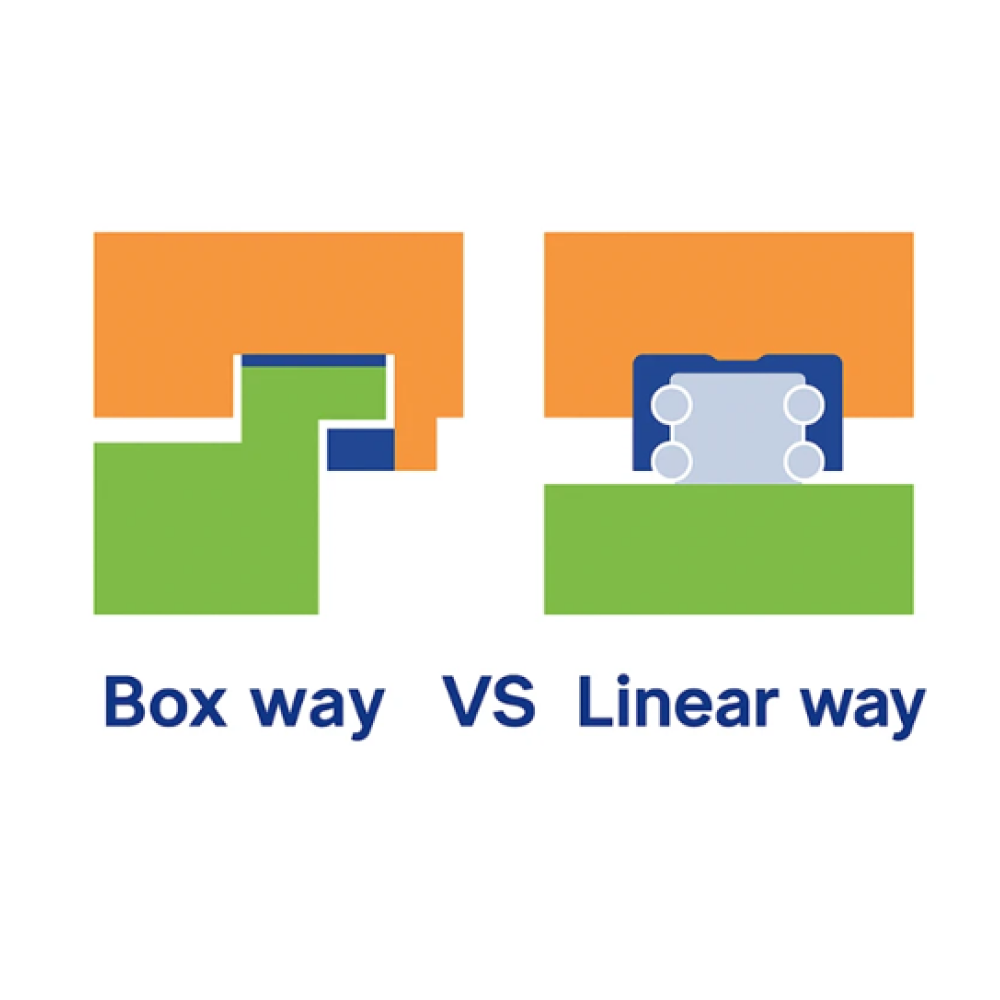
When choosing a CNC machine, one of the most important decisions comes down to how the machine’s moving parts are supported and guided. This is handled by the guideway system. The two primary options you will encounter are box ways and linear ways.
Understanding the core mechanical differences between them can help you determine which system fits your specific machining needs. At a fundamental level, the difference comes down to the type of contact:
- Box ways rely on sliding contact on broad surfaces.
- Linear guides rely on rolling contact on narrow rails.
What Is the Box Way?
A box way is a traditional machine guideway system that features broad, flat sliding surfaces to support and guide the moving parts of the machine.
These systems are typically made of cast iron or other wear-resistant metals, and they are mounted directly onto the machine’s base and saddle structure. Because the contact area is much larger than a linear system, it enables the machine’s weight and cutting forces to be distributed evenly over a larger surface. To ensure accurate and smooth motion, box ways are either hand-scraped or precision-ground during manufacturing.
Pros and Cons of Box Ways
Pros:
- High Rigidity: Excellent stiffness and structural integrity.
- Superior Damping Capacity: Absorbs vibrations exceptionally well.
- Load-Bearing Performance: Handles heavy workpieces easily due to the massive surface area.
- Long-Term Structural Stability: Resists flexing and shifting over years of use.
- Robustness Under Heavy Cutting: Ideal for aggressive material removal.
Cons:
- Higher Maintenance Requirements: Demands consistent attention and care.
- Slower Acceleration and Response: The heavy contact creates more resistance.
- Heavier Machine Structure: Adds significant weight to the overall machine design.
- Reduced Positioning Precision: Higher friction can make micro-adjustments more difficult.
What Is the Linear Way?
A linear way is a modern machine guideway system where the machine’s motion is supported by rolling elements rather than sliding surfaces.
In this setup, the machine moves over a precision-ground rail with the help of a recirculating bearing inside a carriage block. Linear ways are specifically designed to provide smooth, high-speed, and low-friction travel along a straight axis. To keep them running efficiently, this system features sealed bearing blocks equipped with internal lubricating systems and anti-dust wipers. These features extend the life of the system and can minimize maintenance.
Linear Ball and Linear Roller Guides Explained
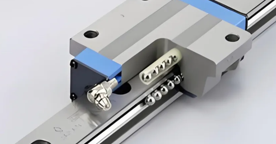
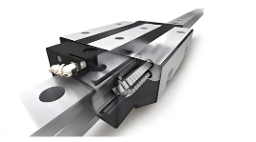
Within linear way systems, the rolling elements inside the carriage block generally have two variations based on the shape of the internal bearings used to support the load:
- Linear Ball Guides: These use spherical ball bearings as the recirculating rolling element inside the carriage block to guide motion along the precision-ground rail.
- Linear Roller Guides: These replace the spherical balls with cylindrical rollers inside the carriage block, utilizing these rolling cylinders to support the machine’s movement along the axis.
Both types focus on maintaining low friction and smooth straight-axis travel.
Pros and Cons of Linear Ways
Pros:
- High Positioning Accuracy: Excellent precision for tight-tolerance work.
- Faster Motion and Responsiveness: Allows for quick direction changes.
- Lower Friction: Reduces the energy needed to move the axes.
- Compact Machine Design: Enables a smaller, more streamlined machine footprint.
- Easier Maintenance: Can be easier to service and keep operational.
Cons:
- Lower Load Capacity: Less surface contact means they may support less weight than box ways.
- Less Rigidity Under Heavy Cutting: Can flex more when subjected to extreme cutting forces.
- Susceptibility to Vibration: Can lack the heavy mass required to naturally dampen chattering.
Performance Showdown: Speed, Accuracy, and Maintenance
Speed and Stick-Slip
Because box ways rely on sliding contact, their friction is naturally higher. This friction limits how fast the machine can move during rapids (fast positioning moves). It can also introduce a phenomenon called stick-slip at low feed rates if the way system isn’t maintained correctly. Stick-slip is when sliding parts experience a jerky, stop-and-go movement as they alternate between sticking together and slipping forward. As a result, typical rapid speeds for box way machines can be lower than those with linear rails.
Linear guides, on the other hand, have very low friction which can allow for much higher, rapid accelerations. This responsiveness can improve contouring accuracy and dynamic positioning. For applications involving high-speed machining, dynamic milling, and tight contour accuracy, linear guides are often a good choice, though you should always consult an expert regarding your specific part requirements.
Maintenance and Longevity
The two systems handle wear and tear very differently:
| Guideway Type | Maintenance & Durability Characteristics |
| Box Ways | While the hand-scraped surfaces and underlying polymers can wear down over time, the system is incredibly robust and can last a long time with proper care. |
| Linear Ways | Feature a “modular” design. When the system gets worn or damaged, the rails and trucks (carriages) can be unbolted and replaced. This process can be easier than re-scraping a solid box way. However, they are more sensitive to sudden impacts or contamination and can be permanently damaged by operational abuse. |
Not sure which machine or guideway system is right for your shop? Contact our team today, and our experts will help you find the right fit for your operations.